
Iranian Baha’i Faces Execution Threat Amid Torture Allegations
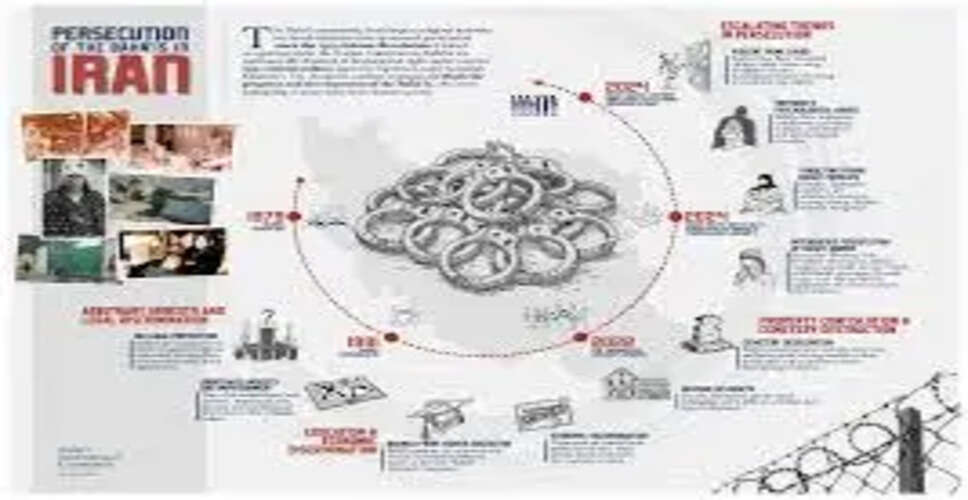
Severe Human Rights Violations in Iran
GENEVA—24 March 2026—Peyvand Naimi, a young Baha’i imprisoned in Kerman, Iran, is at risk of execution following two mock hangings and extensive torture. Iranian authorities are reportedly trying to coerce him into confessing to crimes he did not commit.
Mock executions are considered a form of severe psychological torture and are prohibited by international law. Naimi was detained on January 8 under false accusations of inciting unrest during protests and was taken to a detention center notorious for its abusive practices.
Under duress, he was forced to confess to participating in the protests, a confession that was aired on state television on February 1. Following this, he was moved to Kerman Prison.
To date, Naimi has not faced trial, nor has any evidence been presented to substantiate the charges against him. While many political prisoners have been released recently due to the ongoing national crisis, he remains incarcerated along with other Baha’is targeted for their faith.
Since the establishment of the Islamic Republic in 1979, the Iranian government has systematically scapegoated the Baha’i community during national crises, employing false accusations and coordinated disinformation campaigns.
On February 28, authorities wrongfully implicated Naimi in the deaths of three Basij security agents during the protests, despite him being in custody at that time. He was also falsely accused of celebrating the death of former supreme leader Ali Khamenei, an event he was unaware of due to his imprisonment.
His family is concerned that these fabricated charges could lead to his execution. In mid-March, Naimi endured ten days of relentless torture, interrogation, and deprivation of food and water. He was restrained for 48 hours, beaten repeatedly, and subjected to psychological torture, all aimed at extracting a false confession.
A relative outside Iran reported that Naimi's physical and mental health is deteriorating due to the abuse. "Peyvand has faced mock executions on two occasions," the relative stated, noting that during brief family visits, he often broke down in tears from the immense psychological strain.
After the first mock execution, Naimi told his family he had refused to confess, but he was visibly traumatized after the second incident, which escalated to the point where he was nearly hanged.
Human rights organizations have consistently documented Iran's use of torture and mock executions to obtain false confessions. Simin Fahandej, a representative of the Baha’i International Community at the UN in Geneva, stated, "Mr. Naimi is being tortured and subjected to mock executions to confess to crimes he did not commit. The Iranian government lacks any credible evidence for these accusations, which is why they resort to torture. This cruel treatment stems from the fact that Peyvand is a Baha’i, reflecting the long-standing persecution of this innocent community by the Iranian government."
Currently, Naimi is held in solitary confinement at Kerman Prison, suffering from involuntary eye twitching and gastrointestinal issues, with prison officials denying him medical care.
Fahandej emphasized, "The brutal treatment of Peyvand, an innocent young man, illustrates the Iranian government's relentless scapegoating of the Baha’i community. For five decades, they have shown unimaginable cruelty to coerce Baha’is into renouncing their beliefs. The international community must act swiftly to halt Iran's senseless targeting of Baha’is. Immediate action is essential."
Background information: timeline of events
● On February 28, while exercising in Kerman Prison, Naimi was taken back to the IRGC detention center and placed in solitary confinement. He was later returned to Kerman Prison, where the mock executions occurred.
● Authorities claimed he celebrated the death of former supreme leader Ali Khamenei, which he was unaware of as a prisoner without communication access. His family was informed he was being punished based on this accusation.
● Naimi was then accused of involvement in a violent attack on Basij forces on January 8, during the Iranian government's crackdown on protests, which resulted in the deaths of three Basij officers.
● However, Naimi was detained on January 8, before the deaths occurred, making it impossible for him to have participated in the alleged attack.
● On March 7, Naimi managed a brief phone call with his family, during which he mentioned facing new false charges and pressure to confess, asserting he would not be coerced into a false confession.