
Operation Sindhu: 517 Indians Evacuated from Iran Amid Ongoing Conflict
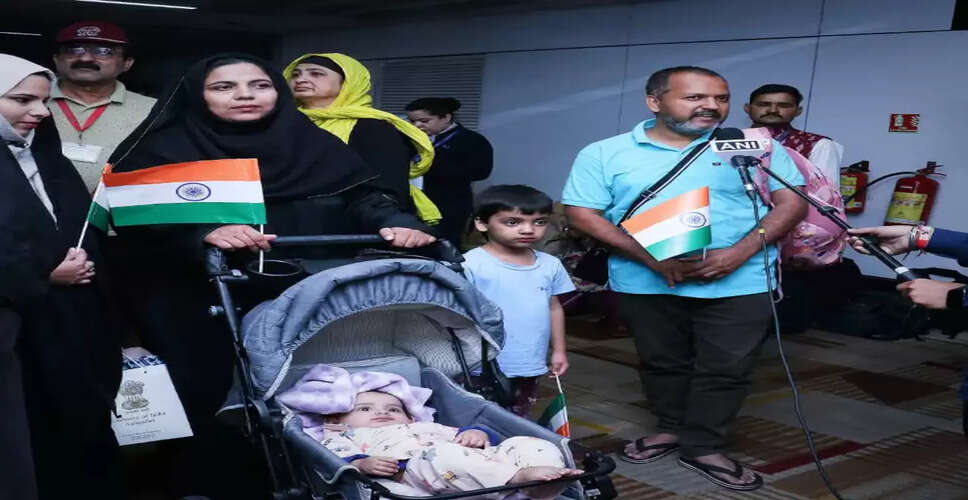
Operation Sindhu Successfully Evacuates Indian Nationals
The official spokesperson for the Ministry of External Affairs (MEA), Randhir Jaiswal, announced that a total of 517 Indian citizens have returned to India from Iran as part of Operation Sindhu.
On June 21, a special flight from Ashgabat, Turkmenistan, landed in New Delhi. This operation was initiated by the Indian government to facilitate the evacuation of its nationals from Iran due to the escalating conflict between Iran and Israel.
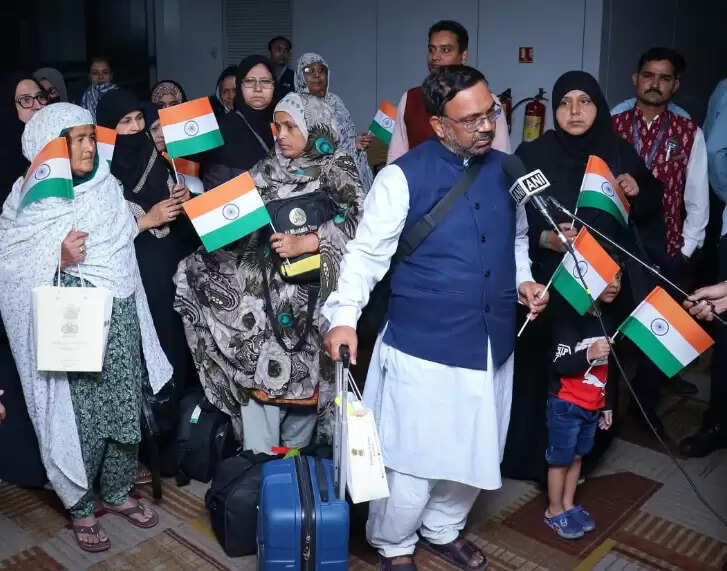
In a post shared on X, Jaiswal remarked, "Operation Sindhu is ongoing. A special evacuation flight from Ashgabat, Turkmenistan, arrived in New Delhi at 0300 hrs on June 21, bringing Indians from Iran back home. To date, 517 Indian nationals have returned under this operation."
#OperationSindhu continues.
— Randhir Jaiswal (@MEAIndia) June 21, 2025
A special evacuation flight from Ashgabat, Turkmenistan landed in New Delhi at 0300 hrs on 21st June, bringing Indians from Iran home.
With this, so far 517 Indian nationals from Iran have returned home under Operation Sindhu. pic.twitter.com/xYfpoxwJtw
A new group of Indian nationals evacuated from Iran safely arrived in Delhi on Saturday as part of the Indian government's ongoing efforts to assist its citizens in conflict zones.
The Indian Embassy in Tehran played a crucial role in coordinating the safe return of students, while the MEA ensured their safe passage. One evacuee, Zaffar Abbas Naqvi, shared his experience of staying indoors with his family after learning about the attacks in Iran.
They later relocated to Mashhad, which also faced attacks, leading them to reach out to the Indian government for assistance. Naqvi expressed his gratitude for the prompt actions taken by the government, thanking Prime Minister Modi and UP Chief Minister Yogi Adityanath for their support.
"Initially, everything was fine, but then we heard about the attacks on Iran. We stayed indoors for a while before moving to Mashhad, which soon came under attack. We contacted the Indian government, and their response was incredibly swift. I am grateful to Modi ji and Yogi ji for their arrangements for us…," Naqvi stated.
#WATCH | #OperationSindhu | Delhi: Fazil Naqvi, an Indian national evacuated from Iran, says, "We thank the Indian government for evacuating us safely. The staff of the Indian Embassy helped a lot. We are happy with the Modi government and we all want the Modi government to keep… https://t.co/oN5yLDfiAE pic.twitter.com/5trFGRjOn1
— Media House (@ANI) June 21, 2025
Another evacuee, Kulsum, expressed her relief at returning home, stating that the situation in Iran was alarming and the government's assistance was crucial.
Speaking to a media outlet, Kulsum remarked, "The situation in Iran is dire. We were extremely worried. The government provided significant help and ensured our safe return home."
Mohammad Ali Qazim, who was evacuated from Mashhad, also expressed his gratitude towards the Indian government for facilitating their safe return. He noted that the conditions in Iran, particularly in Tehran, were concerning.
"I am returning from Mashhad. It feels wonderful to be back home… We had gone for a religious trip. The situation there is troubling, especially in Tehran… The Indian government greatly assisted us in crossing the border and returning to India. The UP government has also been very supportive in taking us back home…" he shared.
The operation continues to provide relief to families across India, with coordinated efforts from both Central and State governments ensuring the safe return of citizens amidst the ongoing regional tensions. The first group of 110 Indian students, including 90 from Kashmir, was successfully evacuated from northern Iran and transported to Armenia before being flown to New Delhi.
These students primarily hailed from Urmia Medical University. The conflict between Israel and Iran has now entered its ninth day, having begun on June 13 with Israel's extensive airstrikes on Iranian military and nuclear facilities, termed "Operation Rising Lion." In retaliation, the Islamic Revolutionary Guard Corps (IRGC) initiated a large-scale drone and missile operation, named 'Operation True Promise 3,' targeting Israeli fuel production sites and energy supply centers.